Halfway Through the Season: What I've Learned Shooting Mountain Bike Races
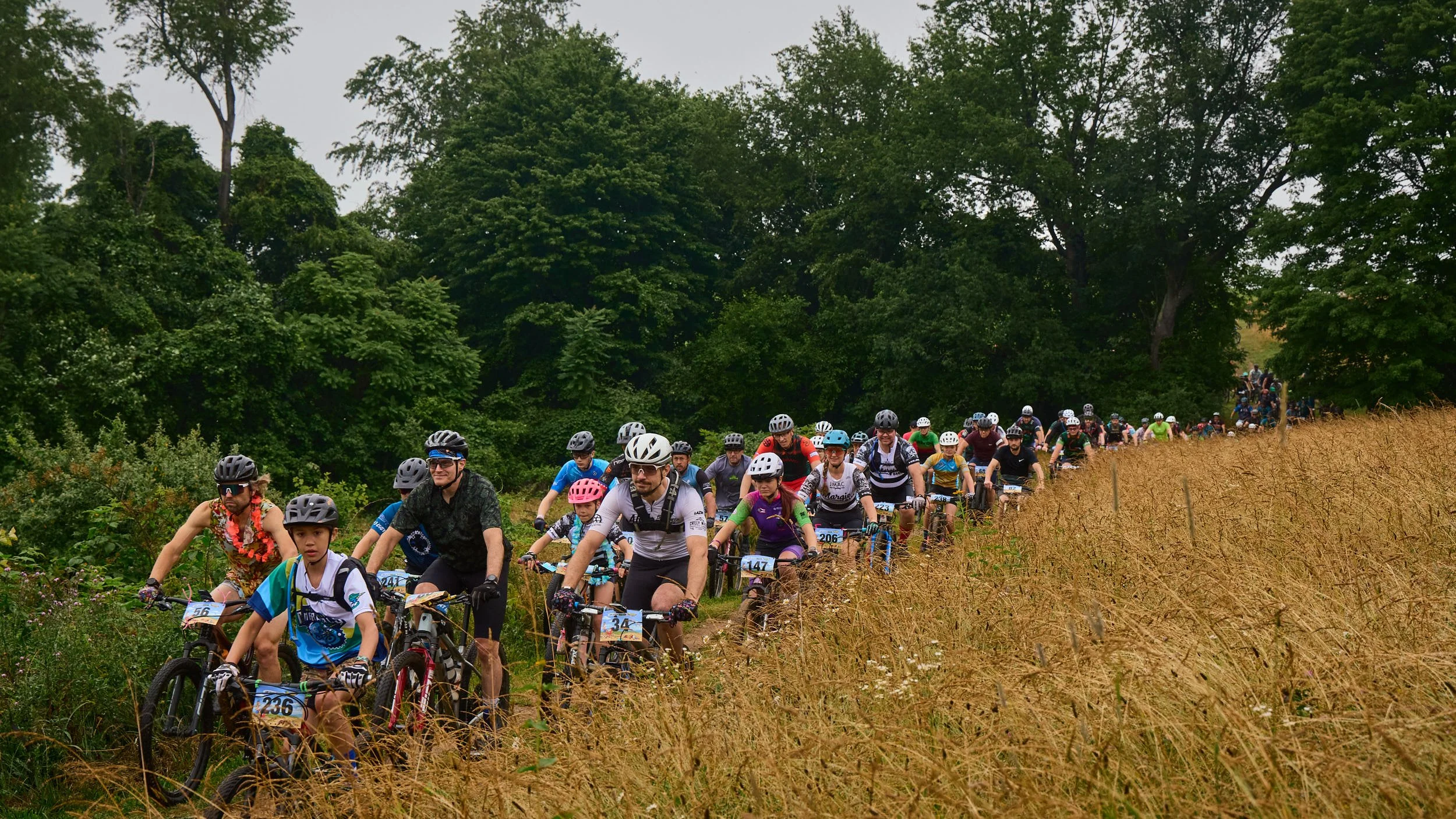
I should say up front, I'm not coming into this as an authority. I used to ride quite a bit. Life happened and I stepped away for a while. Coming back to this world through a camera first instead of a bike means I'm probably noticing things that longtime riders stopped seeing years ago, and probably missing things that are obvious to anyone who never left. With enough print sales and business, I’ll be back in… business. Some of what's below might be old news to you. That's fine. This is a halfway check-in, not a conclusion, and I'll write the second half at the end of the season.
How I'm actually approaching this
I tried not to study other mountain bike photographers too closely before I started, I wanted this to come from my own style rather than whatever the current trends are. What came first, internally, was the documentary instinct, people around the fire, someone fixing their bike up before a race. Spectacle came second, and even then I tried to keep it landscape-oriented, the same filter that's run through my photography for years, just now with a mountain biker somewhere in the frame.
That push and pull between documentary and spectacle is a real tug of war for me, not a rule I hold perfectly. It showed up hardest at my first downhill race at Holimont in New York. I wrote more about that tension, and about a crash that made it concrete, in One Downhill Race Isn't Enough to Know Anything Yet.
Do you need to own a mountain bike to shoot mountain bike racing?
I don't currently own a mountain bike, and when someone asks if I ride, that's a harder question to answer honestly than it sounds. I wrote a full post on what that gap actually does to how I show up out there, and what it costs the work, in Do You Ride, Bro?
What's surprised me about the community
The age range is wider than I expected. Three and four year olds have their own bracket, and I've shot competitive 70+ year olds who are actually racing, not just showing up. One thing I found interesting was how empty the podiums are after the race. Sometimes it’s 1st place, or all but one finisher who has left early. Life happens and sometimes it’s a previous obligation, things aren’t going well. No judgment, just an observation.

Parents are doing double duty everywhere, racing their own event while also keeping track of a kid who's racing too. I've watched this from moms and dads both, no real basis to say one does more of it than the other.
There's a wealth gap on display at every race. I've watched $80,000 trucks pull in with ±$10,000 bikes in the bed, or off the back. ( This is one end of the regional race series spectrum) Meanwhile I'm walking around with roughly that same amount in camera gear on my back, still no mountain bike of my own. What I find more interesting than the expensive rigs is the person who shows up in a beat-up truck with a beat-up bike and has just as much fun as anyone else there. Neither one is doing it better, but the ratio of rust buckets to tricked out and new rigs is telling of the sport, even for someone who doesn’t know anything about it. I also should qualify, this is entirely based on observations at races. From experience I know there are far more riders out there who show up to trails with a ‘03 Subaru and a ± $10,000 bike.
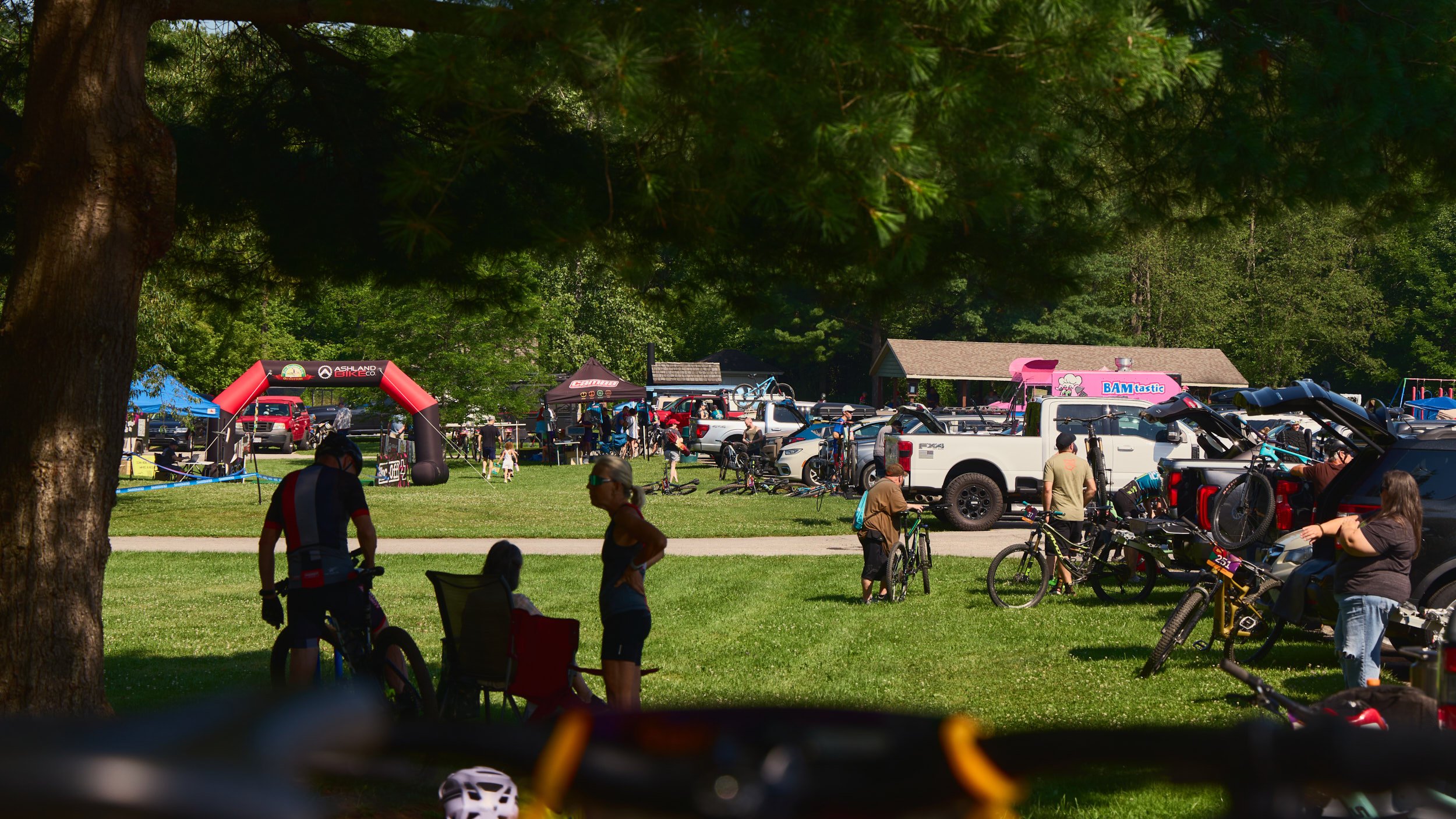
There's a quieter split too, between e-bikers and analog riders. Reminds me of ten years ago at the bike shop when e-bikes were new and there was real tension over who belonged on the trail. That's settled into something more like self-segregation now, e-bikers and analog riders often cluster separately around the fire, even though plenty of people own both. And it's worth being clear about this: e-bikes aren't just for people looking for a shortcut. For a real number of riders, it's the only way they get on these trails at all.
Logistics, still confusing as a newcomer
Even now, showing up to a new race means a list of basic questions. Where's the start line. When does it actually start. Where can I stand. One race early this season listed its location online, only naming the area without further signage until the parking lot entrance itself. That camp is enormous. I found it by following a truck with bikes in the bed and hoping we were headed the same place. That series markets itself as one of the most beginner-friendly out there, and in a lot of ways it is, this was just one gap in an otherwise welcoming setup. This is not a critique on that series alone, I wouldn’t mention this if I hadn’t observed multiple races with less than ‘already in the know’ language. Nor do I think this is malicious, it’s easy to forget that not everyone is familiar with your series, local trail, etc.
I regularly research races around the country and region, and I went back through one series' website in full, start to finish, the way a first-timer would. It's a pattern I see a lot. These sites tend to open with strong community language, rules like treat each other with respect. But once you get past that framing, the actual event page is dense with category codes, age brackets, class abbreviations, none of which mean anything to someone new. The site says you belong here, I just wonder if the welcome mat could be a bit more colorful.
Overall, the series I’ve photographed the most works hard to be inclusive and to be as accommodating as possible. In previous adventure sports I’ve captured I’ve seen where races like these become essentially a corporate money grab. It’s great to a series operate with community driven intentions.
Who actually builds and maintains mountain bike trails?
The course marshals I've talked to are often the same people who built or maintain the trail itself, something I got to see up close scouting Holimont for three days before that race ever started, more on those conversations in Three Days of Hiking before the Race Ever Started. Closer to home, a private mountain bike trail on private land here in Ohio was sold this year and is going to be lost. That's not abstract to me, it's part of why I'm doing the Portraits of Adventure work in the first place, documenting a place before it disappears or goes unrecognized.
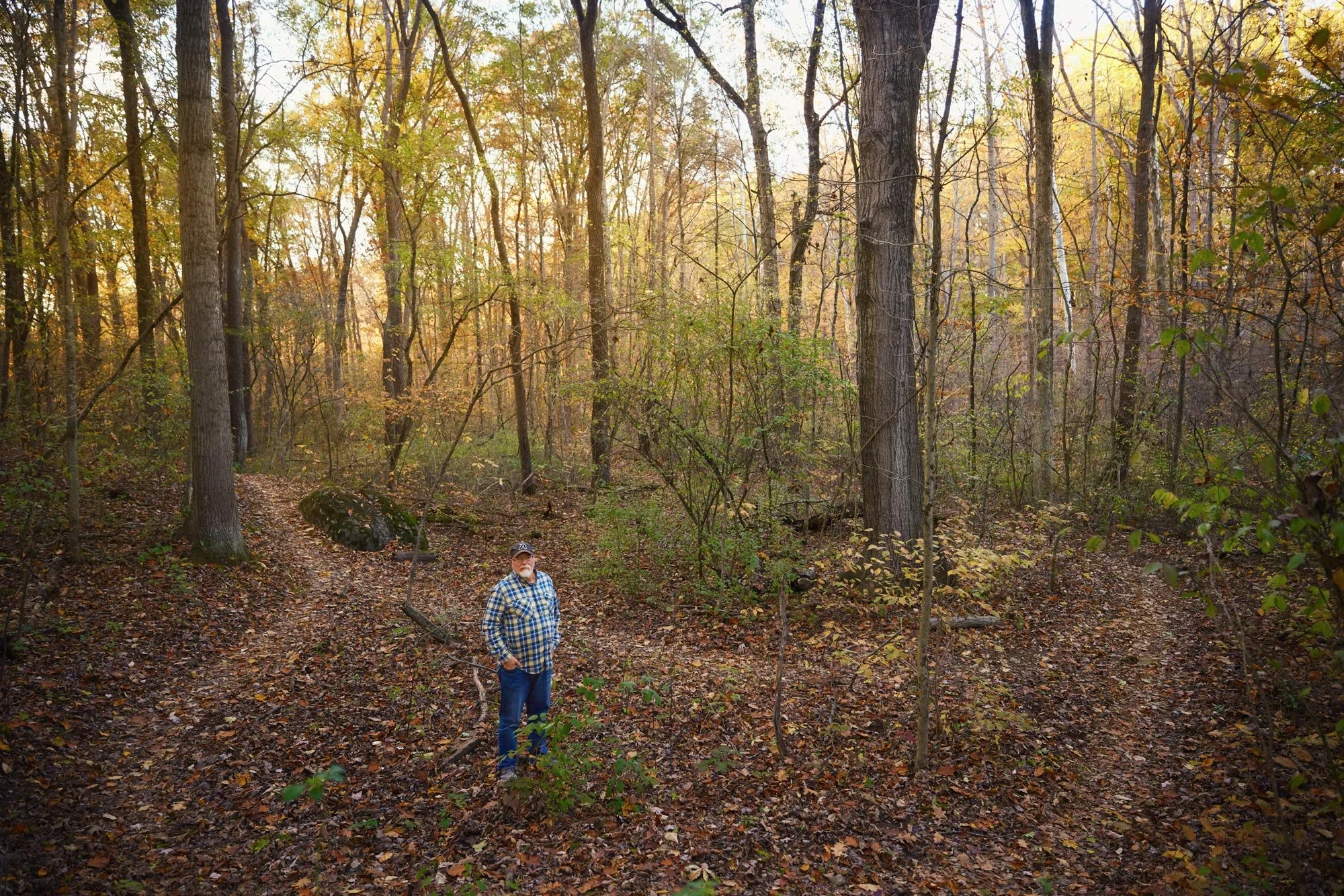
Bill is the clearest example of this I've photographed. He helped shape the trail at Lake Milton years before I ever met him there, and he still shows up as a trail marshal for the races run on it now, the same trail where we first crossed paths while I was shooting a race. I got to photograph him for Portraits of Adventure, and what stuck with me wasn't just the trail work, it was learning how he's used cycling to manage a Parkinson's diagnosis, working with research out of the Cleveland Clinic on how high-intensity cardio can slow its progression. You can read his full story here.
I also notice a lot of energy gel wrappers left on course during the longer races. I'm usually deep in the woods for these shots, well past where a casual spectator would ever walk, hunting for a line or a gap in the trees, and that's exactly where I keep finding this stuff. I don't think it's intentional. Things fall out of a jersey pocket mid-race and nobody's stopping to pick them up while they're racing. I get it. But I'm the one who ends up picking it up anyway, because I'm out there anyway and I can't just leave it, and honestly I'm getting tired of it.
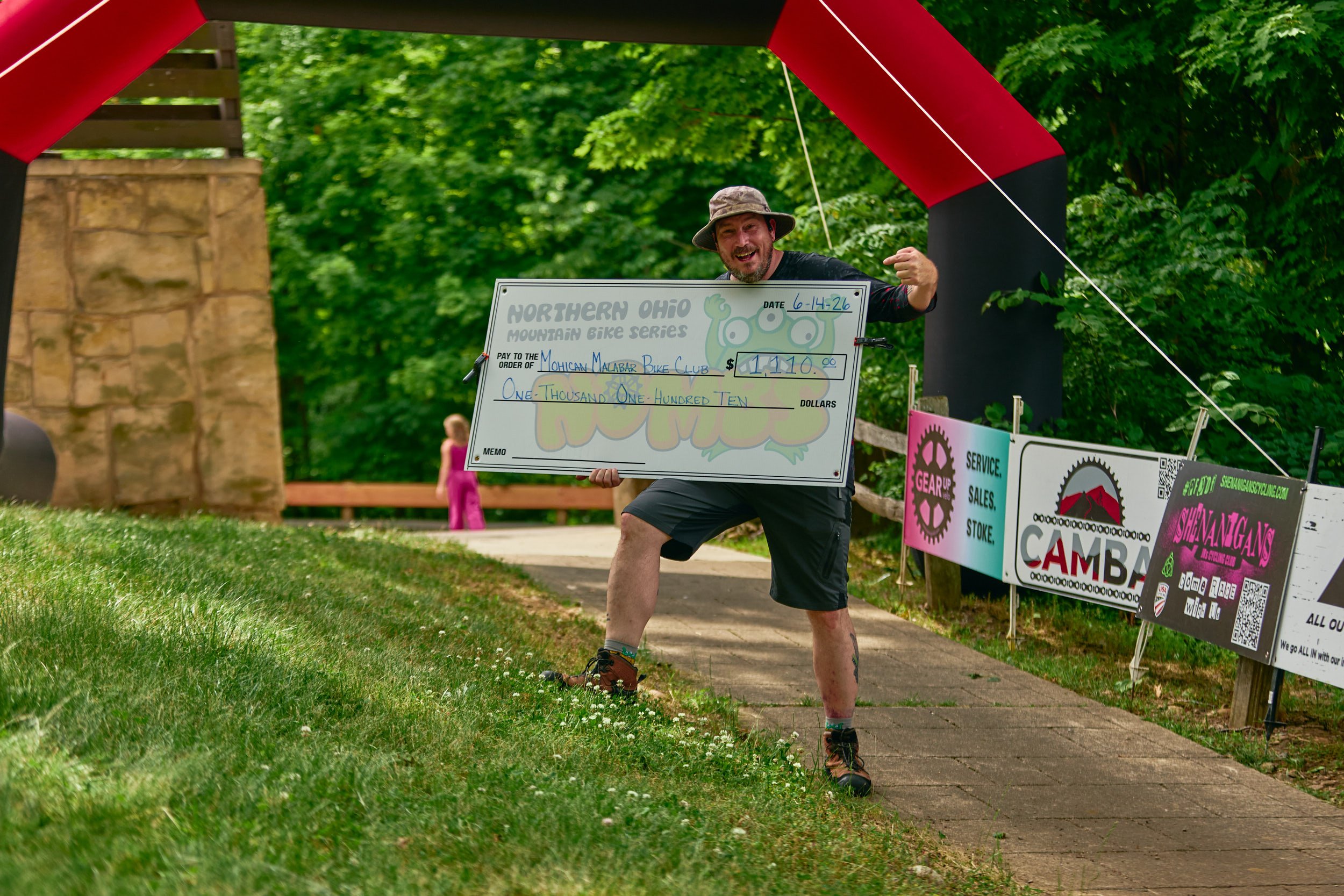
I know a lot of these races cut a check back to the clubs, local trail association or the trail builders when it's over, which is very commendable. Keeping the money inside the community that keeps the land protected, and usable in the first place is the right thing to do. Across events that utilize trails, I’ve noticed the amount of litter often left on the trail, gel pouches mostly. I don’t think it would be a huge leap to build a course sweep into the event. It’s a lot to ask of one person, especially after a tiring day of race support, to hike 3, 5, 10, etc miles to pick up garbage. The trail doesn't stay a place worth racing on by accident. Somebody has to keep looking after it, and right now that somebody is sometimes the next person to hike the trail.
Gear, money, and the resale economy
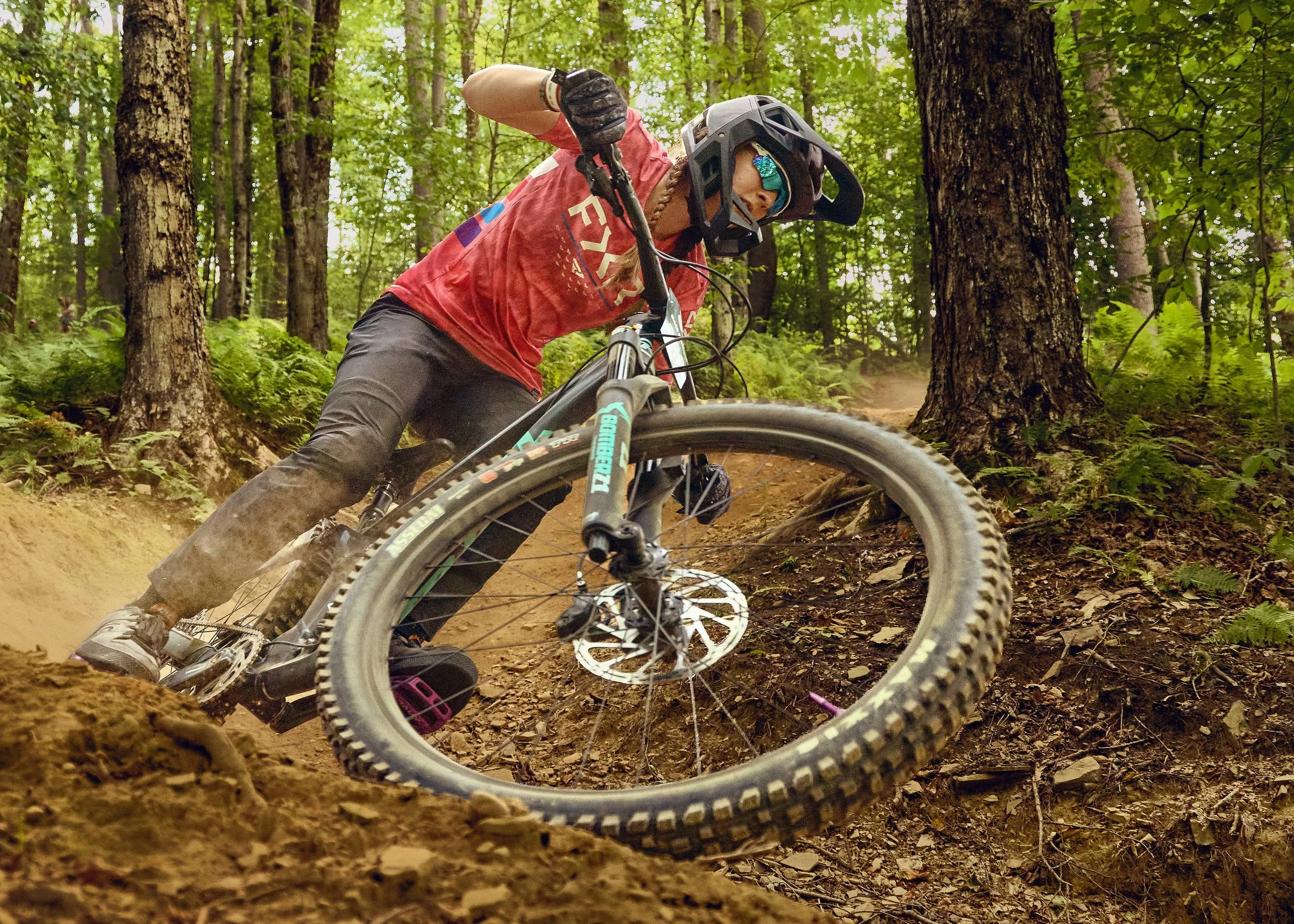
The bikes people ride span the full range, some worn and clearly a decade or two old, some brand new. I watched the wheel size conversation play out in real time too, 26 to 27.5 to 29 has been the standard progression for a while, but 32-inch wheels are just starting to show up now, and one guy at a race had a brand new one. People noticed. It got some good-natured ribbing, the same kind 29ers got when they were the new thing.
I've also looked into the used bike market a little, wanting to support the reuse side of this sport, and found it genuinely overwhelming, too many listings, too many sizes, no clear way in as an outsider. That's not a knock on it, people clearly find bikes there, which is exactly why the listings keep coming. It's just a lot to sort through from the outside looking in.
This is actually where I'd make a case for the local bike shop, and I say that from having worked in one. People came in constantly who couldn't afford a nice new bike and had no intention of buying one that day. They'd pull up a listing they found online and just ask what we thought of it. Sometimes that was the whole visit, no purchase, just wanting a straight answer from someone who actually knew the bikes instead of piecing it together from hours of questionable YouTube opinions telling them whatever kept the algorithm happy. We saw a lot of that. A shop can't stop someone from buying the wrong bike off a marketplace listing, but it can at least tell them what they're actually looking at before they do.
Meanwhile a Walmart bike won't hold up to real racing, it'll break down constantly, and for a family on a tighter budget that's a real barrier to even trying this. It has to be out there, programs that help new riders into bikes. Not one off raffles, but a system. I was happy to learn this season that a local club makes sure they have a surplus of bikes to ensure no kid is ever turned away from mountain biking because they can’t afford a bike.
My own kit, and how it's changed this season
Early on I packed everything I owned into my car for every race, full lighting setup, backdrops, gels, grids, because I didn't know what I'd need. I've since stripped down to a single camera body, two lenses, spare batteries, tripod, etc. (not too etc.) I used to bring a backup body too, but stopped keeping two bodies out at once mid-race, they're six years apart in technology and switching between them was costing me shots. I'm hoping to eventually buy a matching second body so I have a real backup at the same caliber. I've been hesitant to use flash on riders mid-race, even though it's completely normal in sports photography. I don't want to feel like I'm intruding on the moment.
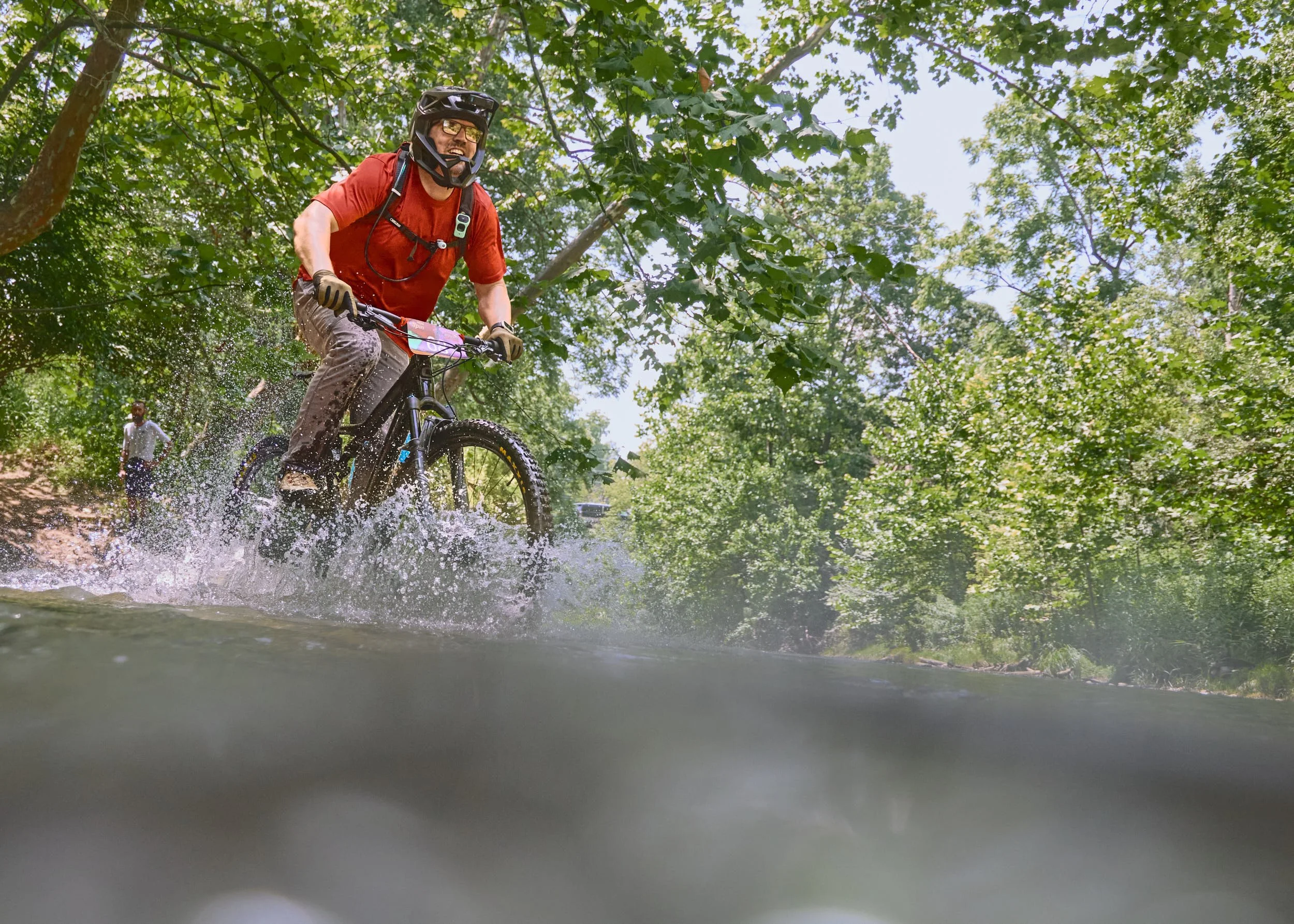
I picked up an underwater housing kit this year for river crossings, and I'm looking at adding a dome port next so I can shoot split frames, above and below the waterline in the same image. There aren’t a ton of water crossings, but it sure adds some insurance on wet days as well.
I used to way overshoot everything as I wanted to make sure everyone had a photo of themselves. My new camera's faster burst rate means more files, but I've gotten better at picking the moment that matters instead of spraying and praying. I’ve also realized I don’t have to capture every single turn, jump, birm, or feature. The last several races I’ve actually ignored some great angles and spaces because the light just wasn’t there. I’m becoming more picky, and that’s a good thing.
Are mountain bike races a third space?
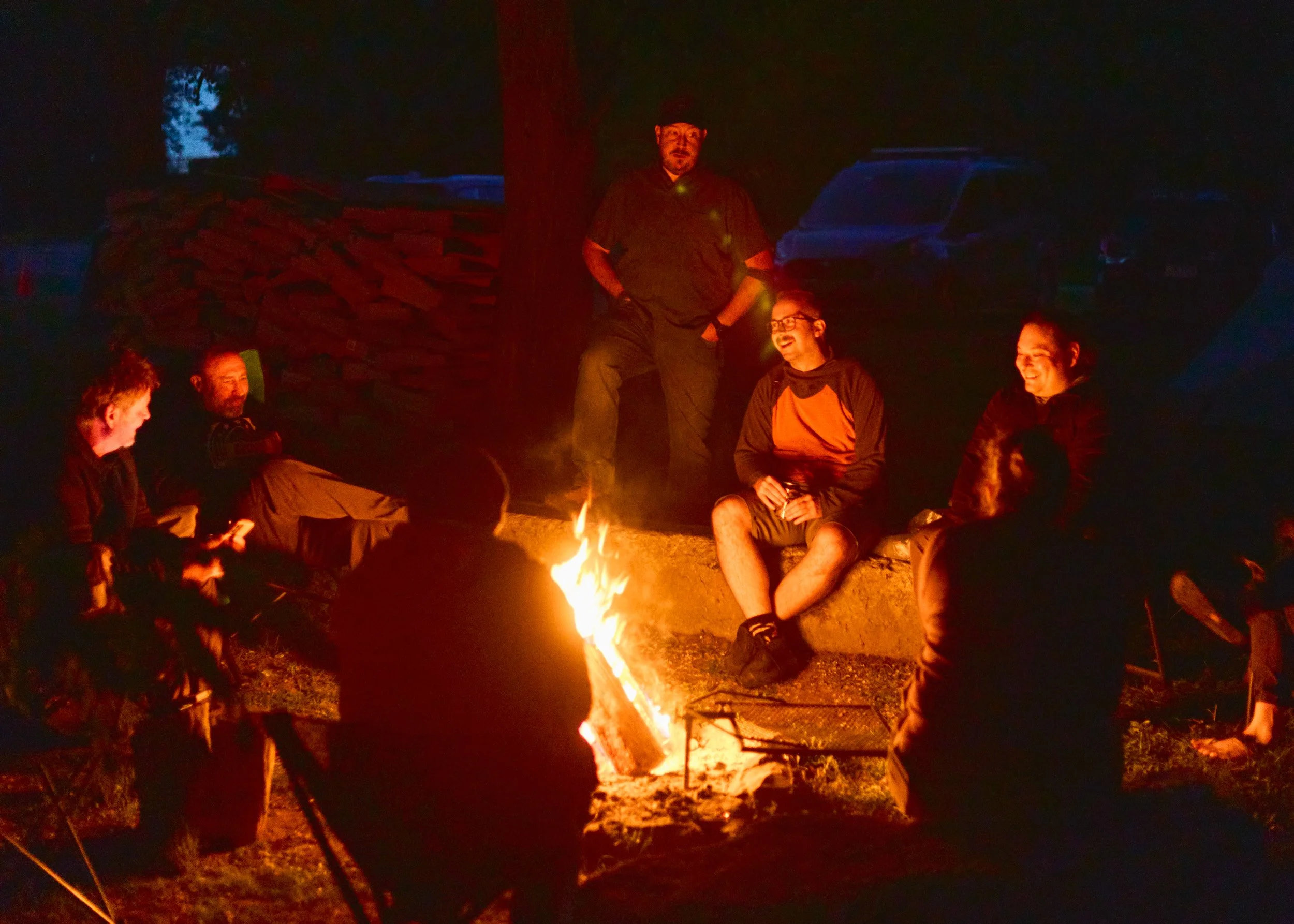
For as much as I've said about feeling like an outsider, the overall community is a good one, and most people are encouraging. What gets me every time is showing up to a race and finding it's not really about the race at all for half the people there, it's the family, the kids, the spouse, the significant other, the dogs, the lawn chairs and blankets set up along the course. It's a third space in the truest sense, not home, not work, just a place people return to and gather. That's a great place to meet people, and it's a big part of why I keep coming back with a camera even on weekends I could use off.
Where this leaves me
Four races left before the season wraps. I still don't own a mountain bike. I still get asked if I ride. I still have to decide, every time, how honest to be about that. I'll write the second half of this at the end of the season and see what's different.
