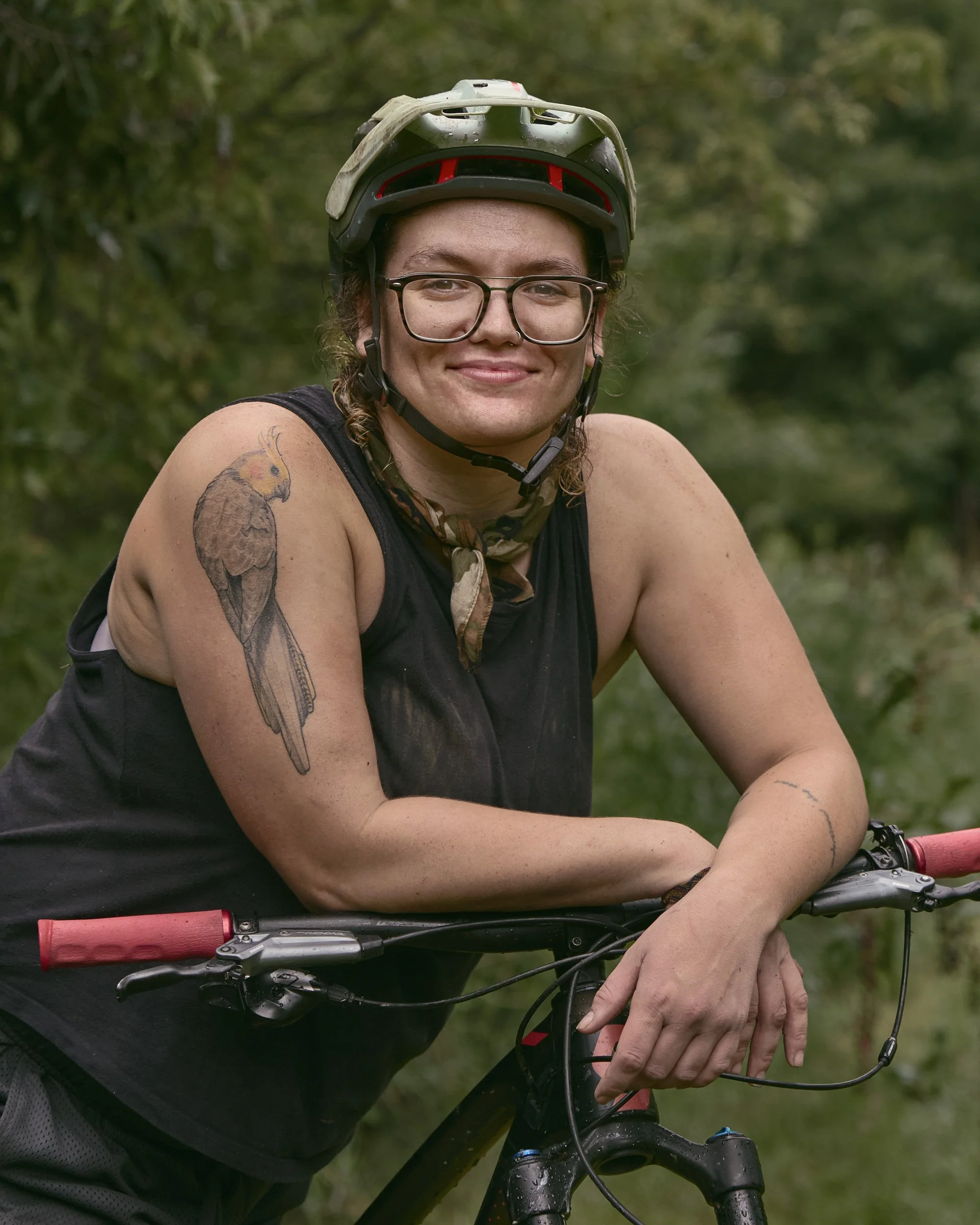
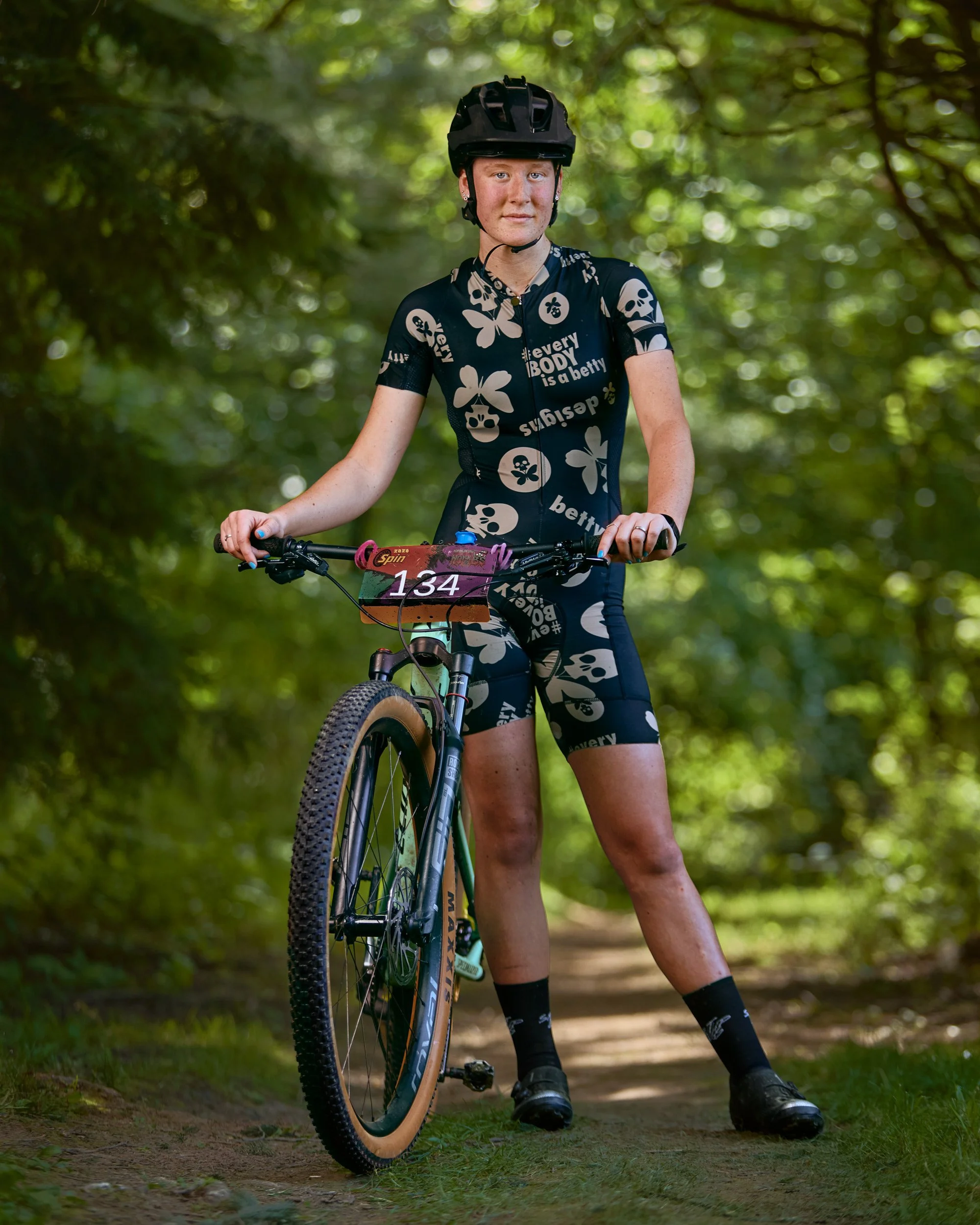
Portraits of Adventure / Vultures Knob / Allegra Haberern
Allegra Haberern
Vultures Knob, Wooster OH
August 2026
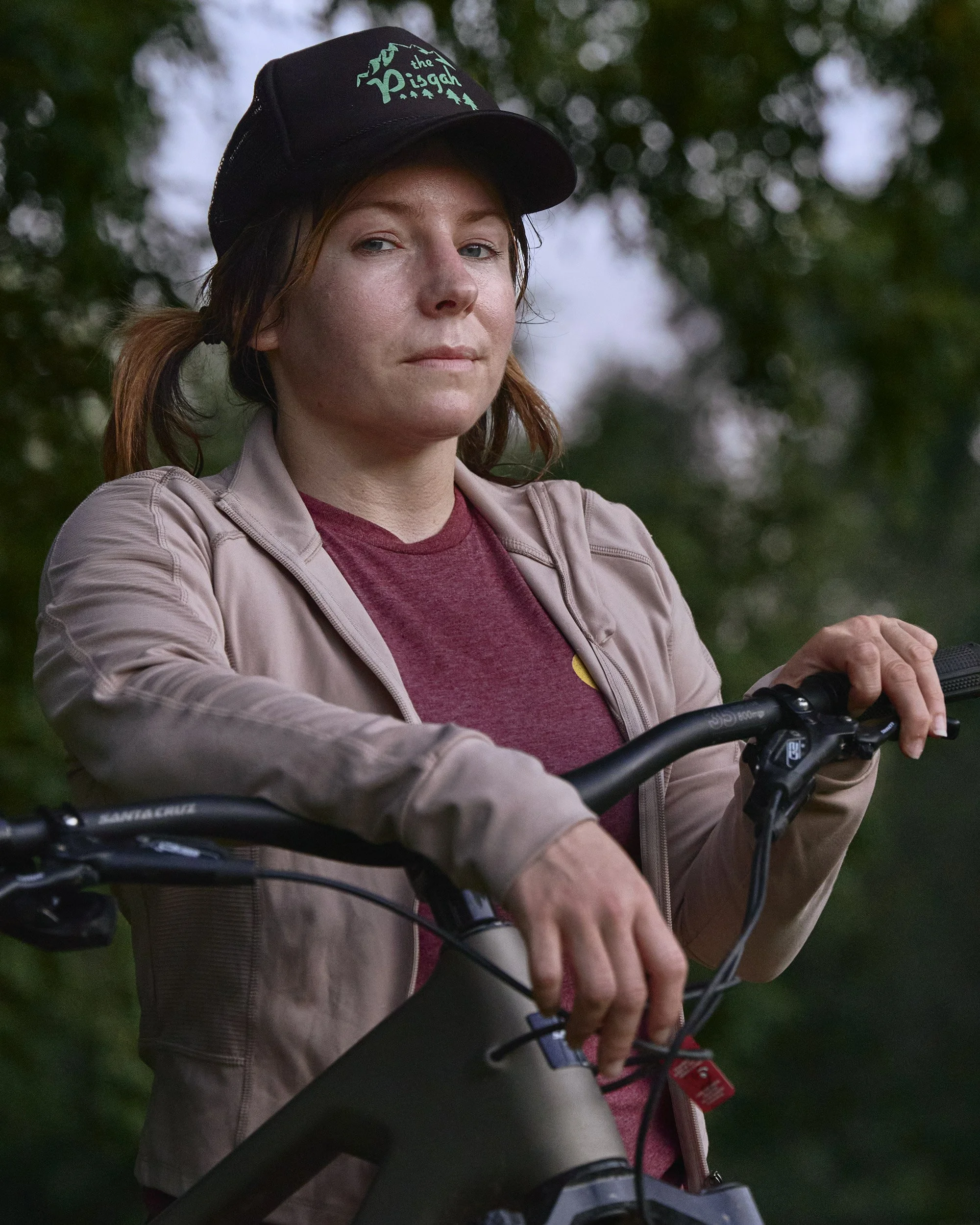
Allegra Haberern didn’t come to Vulture’s Knob to ride.
She came because her best friend was losing something. Carrie and Allegra met about ten years ago at Malone University in Canton, and Carrie has spent years at VK. When Allegra heard the trail was closing for good, she knew she wanted to be there before it was gone, for Carrie.
She also came because she wanted her daughter’s first camping trip to mean something. Melanie is seven. This was her first night sleeping outside, her first time watching her mom try something scary and new, mountain biking.
She crashed twice. Both times over the handlebars. The first time, she picked herself up, checked that nothing was broken, and got back on. The second time, Melanie was close enough to see the whole thing happen, to watch her mother go down and then watch her get back up. “You get back up and you breathe and you start again,” Allegra said. With her kid watching, that decision to get back up was energized.
There was one more surprise that weekend. Partway through, Allegra’s sister showed up, flown in from Colorado. It was a secret Carrie had helped pull off, a surprise for Allegra she hadn’t seen coming. Her sister is Alyssa Haberern, whose own portrait is part of this same project, so without either of them planning it, two sisters ended up woven into the same chapter of the same trail’s last season.
Allegra writes, poetry and short fiction mostly, often circling questions of empathy and the gray areas of being human, messy. It’s not a surprising thing to learn about her once you’ve spent time listening to how she talks about the woods.
Because the clearest thing about Allegra isn’t the crashes or the surprise visit. It’s how she experiences the outdoors as a deaf woman.
She lost most of her hearing in one ear around age five. She’s one of three deaf siblings out of six kids, all carrying the same recessive gene. She reads lips, uses cues, signs, wears a hearing aid. Every once in a while she’ll take out her hearing aid as it allows her to be more present in the moment, and for her, it means focusing on her other senses to take in the surroundings.
“My other senses are enhanced,” and you could tell by how she responded to things not immediately obvious. She talked about a kind of fairy-tale imagination she had as a kid, built around trees and the natural world, and about how being outside has always worked on her anxiety and depression that she hasn’t been able to find anywhere else. “I come alive when I touch the trees.”
She doesn’t need to hear a creek to know it’s there. She doesn’t need the sound of wind to feel it move past her. What she said, more than once, in different ways, was that not hearing the outdoors never meant not feeling it.
Near the end of our conversation, she circled back to why she’d come in the first place; to a place, to land, to what it means to lose access to both. “They keep taking pieces of land that don’t belong to one person,” she said. “It should be for the people.”
More from Vultures Knob


Explore other Chapters